Natural Resources Department
Preserving Our Cultural Heritage and Ancestral Lands
Our mission is to assess, protect, and enhance the Tribal and environmental resources including those of culture, language, land, air and water on the ancestral homelands of the tribes and bands of SIR. It is our vision to maintain a healthy community through the nurturing and management of our natural resources.



Carrying the Traditions of Our Tribes into the Future
Culture, Language & Historic Preservation Programs
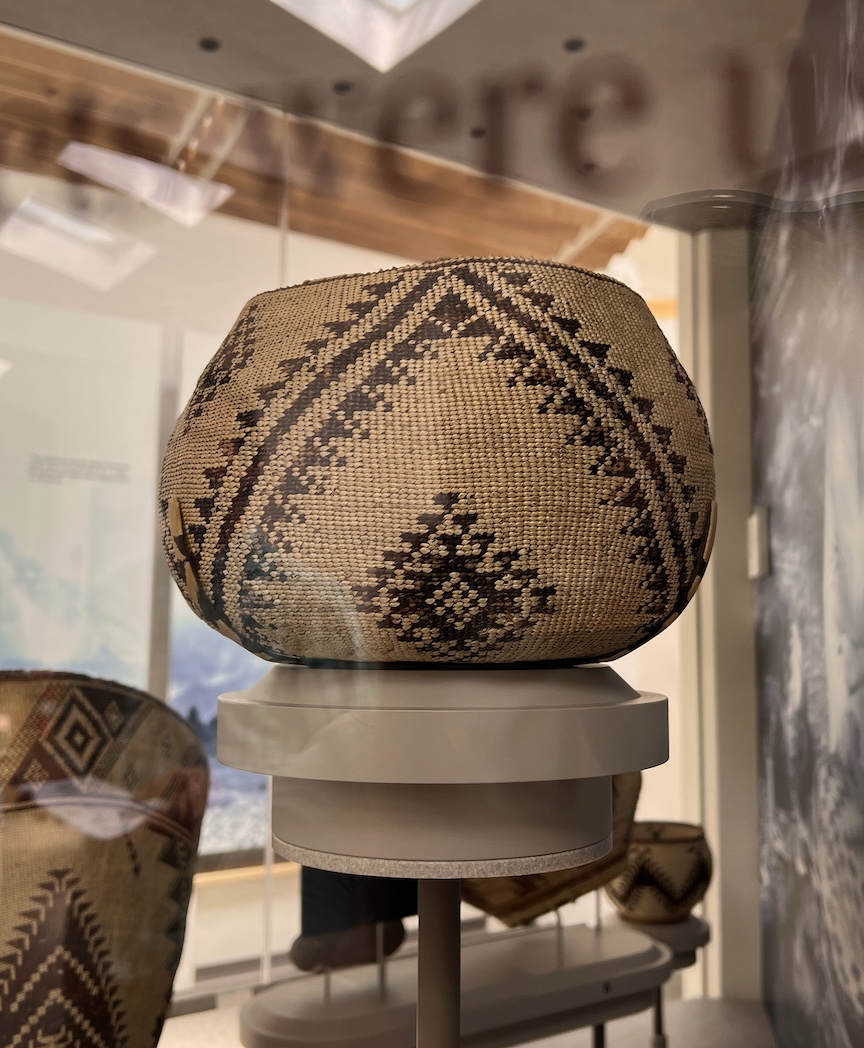
Language Revitalization Program
- Preserve and actively revitalize the four Native Languages associated with the SIR including the Maidu, Paiute, Pit River and Washoe Languages.
- Record and distribute lullabies and traditional songs recorded in the four languages.
- Teach curriculum and language classes in the Mountain Maidu language.
Tribal Historic Preservation Office (THPO)
- Protect, conserve and preserve cultural resources on ancestral homelands of the SIR.
- Inventory and protect cultural resources on Tribal lands.
Native American Graves Protection and Repatriation Act (NAGPRA)
- Member of the Northeastern California NAGPRA Tribal Coalition.
- Participate in consultation with museums and federal agencies.
Grant Administration
- Administer over 20 federal grants for the SIR totaling more than $1,000,000 annually.
- Apply for new funding to develop tribal environmental, cultural, and educational programs.
Consultation and Collaboration
- Maintain relationships and participate in consultation with local, state, federal, and tribal agencies on natural and cultural resource protection.

Natural Resources
Treat the earth well! It was not given to you by your parents; it was loaned to you by your children. We do not inherit the earth from our ancestors; we borrow it from our children.
Ancient Indian Proverb
Natural Resources Department Staff
Brandie Hernandez, Natural Resources Director
530 251-5636 bhernandez@sir-nsn.gov
Aaron Brazzanovich, Jr., Environmental Coordinator
530 251-5866 abrazzanovich@sir-nsn.gov
Kurt Merino, Environmental Technician
530 260-0327 kmerino@sir-nsn.gov
Maudesty Merino, Tribal Historic Preservation Officer
530 250-8893 mmerino@sir-nsn.gov
Conservation Crew (Seasonal)
Crew Members (5)
General Program Activities
Resource Inventory and Planning
- Inventory and document natural and cultural resources with GPS including wildlife and plants.
- Develop and administer plans to protect and preserve tribal resources.
- Develop geographical information system (GIS) resource databases important for the protection of SIR environmental and cultural resources.
Grant Administration
- Administer over 20 federal grants for the SIR totaling more than $1,000,000 annually.
- Apply for new funding to develop tribal environmental, cultural, and educational programs.
Consultation and Collaboration
- Maintain relationships and participate in consultation with local, state, federal, and tribal agencies on natural and cultural resource protection.
Enforcement and Compliance
- Develop Tribal environmental laws, codes and ordinances.
- Tribal Youth Conservation Crew (TYCC) – provide a tribal summer program for youth to receive training in natural resource protection and management.
- Environmental Outreach – provide tribal education programs on solid waste management, pollution prevention, noxious weed control, and environmental law.
- Cultural Resource Outreach and Education – provide tribal, local and regional programs to educate the public on cultural resource protection and traditional ecological knowledge (TEK).
Conservation Crew Program
- Inventory and document natural and cultural resources with GPS including wildlife and plants.
- Remove hazardous fuels from tribal lands for resource protection.
- Clear trails in wilderness areas on national forest lands.
- Participate in regional efforts to fight wildland fires on federal lands.
Clean Water Act (CWA) Section 106: Water Pollution Control Program
- Monitor surface and ground water quality on Tribal Lands.
- Develop restoration and enhancement plans for water sources, springs and streams.
Clean Water Act (CWA) Section 319: Nonpoint Source Pollution Management Program
- Inventory and monitor nonpoint source pollution issues on Tribal lands.
- Develop and implement a nonpoint source pollution management plan.
Safe Drinking Water Act (SDWA) Program
- Build capacity for the tribal-wide drinking water system.
- Monitor drinking water quality and facilities for residential communities on Tribal Lands.
Solid and Hazardous Waste Management Program
- Develop and implement a solid waste management program.
- Develop and implement recycling and composting programs.
- Research methods to reduce and remove solid and hazardous waste generated on Tribal Lands.
- Provide means for removal of household hazardous waste and abandoned vehicles.
National Environmental Policy Act (NEPA)
- Develop and review environmental documents developed to meet NEPA, California Environmental Quality Act (CEQA), and environmental law requirements for proposed projects on Tribal Lands.
- Review environmental documents of federal, state, county, and city agencies for projects located within the ancestral homelands of the tribes and bands of the SIR.
SIR Upper Rancheria Restoration Project 2026
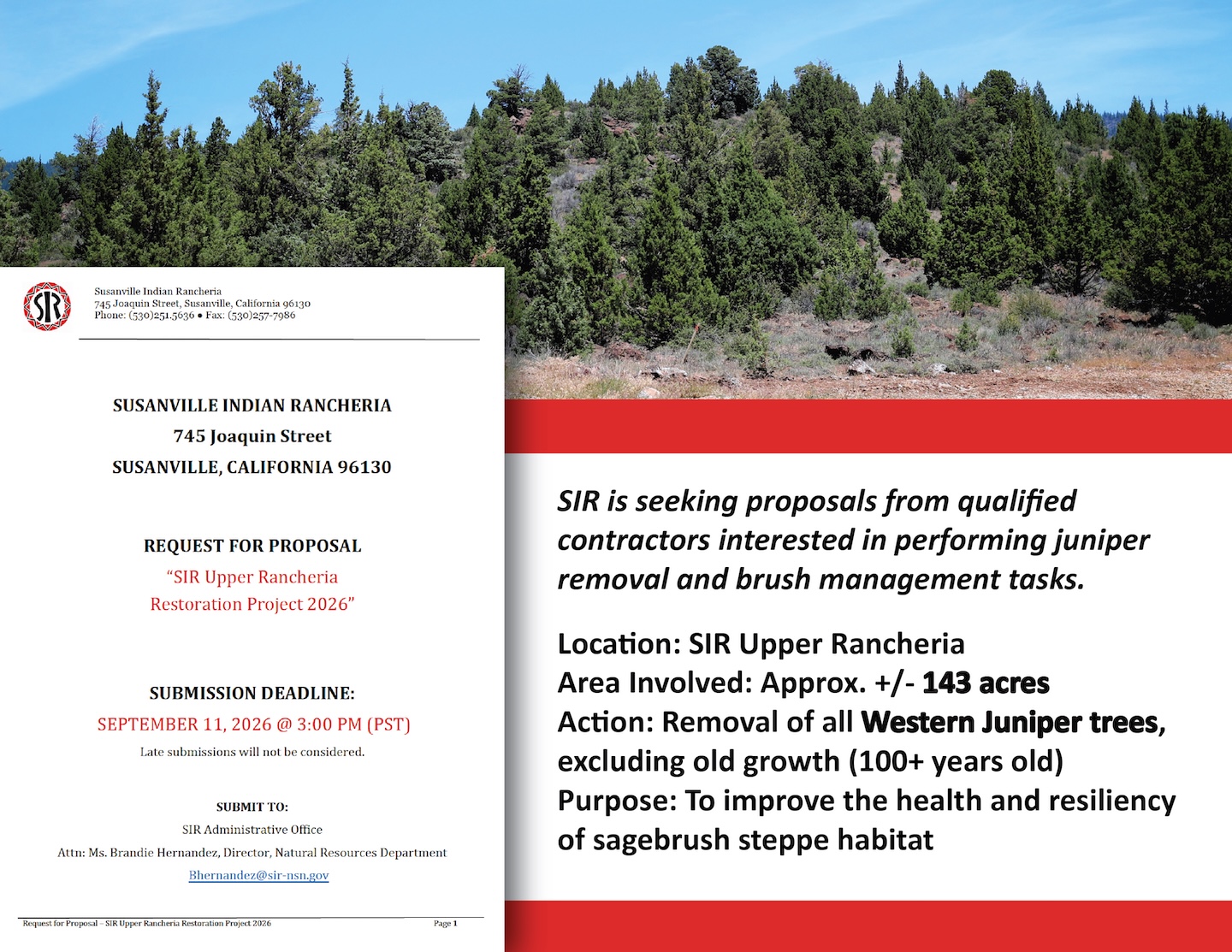
Submission Deadline: September 11, 2026
Submit to: SIR Administrative Office, Attn: Ms. Brandie Hernandez, Director, Natural Resources Department, Bhernandez@sir-nsn.gov